Spring 2024 issue of Peitho Live at the WAC Clearinghouse!

Dear friends,

On behalf of the editorial team, I’m happy to announce the spring 2024 issue of Peitho, now at its new location, the WAC Clearinghouse! Three cheers for the co-editors, Rebecca Dingo and Clancy Ratliff, for overseeing this exciting transition.

https://wac.colostate.edu/peitho/archives/v26n3/

The issue has some great articles and book reviews, plus a Cluster Conversation on feminist new materialisms, featuring undergraduate research!

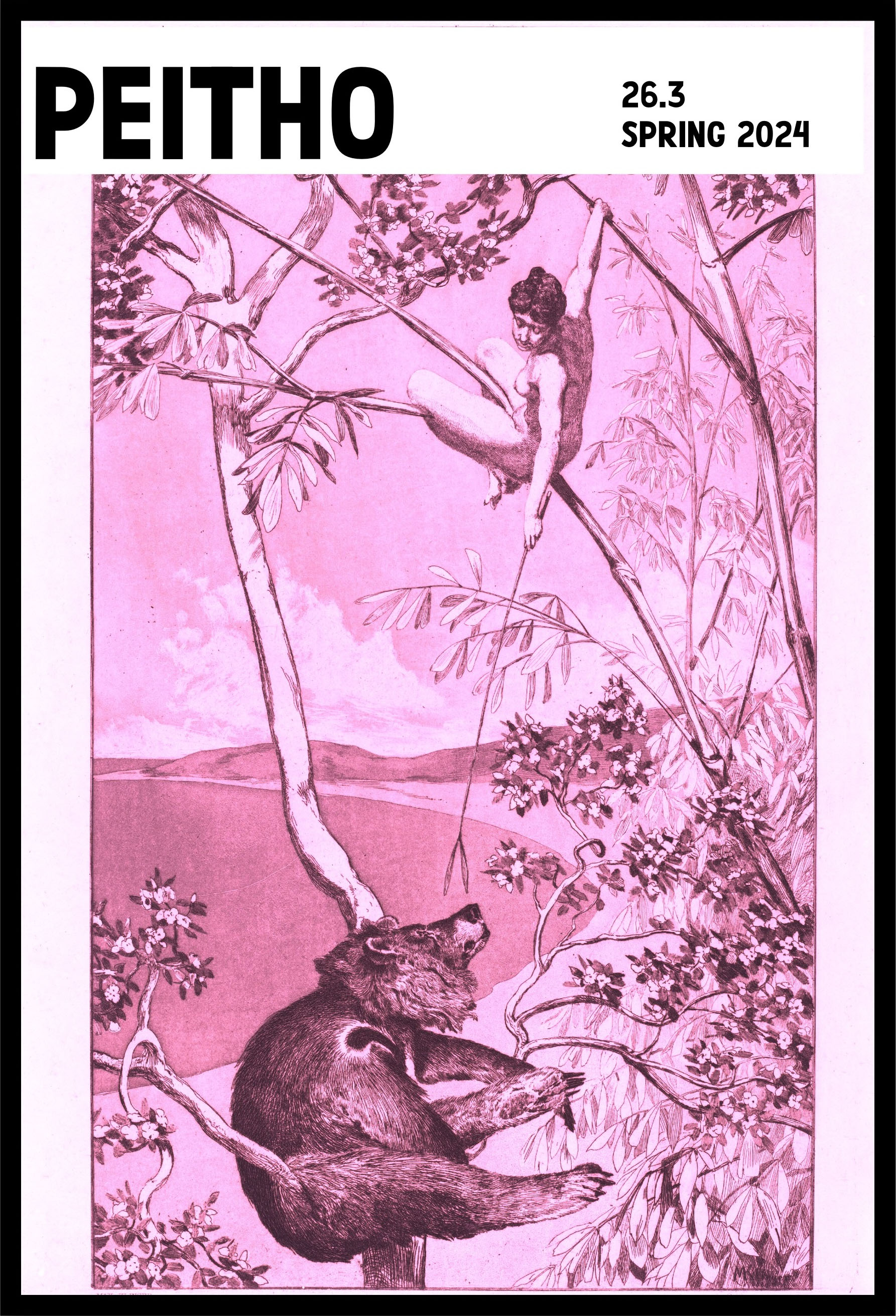
Oh, and for those on the Editorial Team: we choose the bear.

A print (etching and aquatint) showing an elf woman in a tree. She is nude and is using a long branch to point downward at a bear who is looking up at her. In the background are other leafy branches and a scenic cove. The print has a pink tint, and at the top left is the word Peitho. At the top right is written '26.3 Spring 2024.' Around the whole image is a black frame. The original art is by Max Klinger and is titled Bear and Elf (Bär und Elfe). It was created in 1881 and is in the National Gallery of Art’s public domain collection of images.

Happy reading!

Becca Richards, President CFSHRC

Call for Applications: Peitho Journal Editor(s)

Call for Peitho Editor/Co-Editors

The Coalition of Feminist Scholars in the History of Rhetoric and Composition (CFSHRC) is seeking an editor–or a pair of co-editors–for Peitho, our quarterly peer-reviewed online journal, beginning June 1, 2025, with early onboarding to begin on or around January 1, 2025.

In supporting the Coalition’s mission, Peitho seeks to publish research that advances the feminist study of our profession, including

  • Peer-reviewed scholarly texts (i.e., essays, webtexts, standalone videos);
  • Book reviews;
  • Recoveries and Reconsiderations;
  • Special edited content, including scholarship presented at the Coalition’s Wednesday night CCCC session.

In cooperation with an associate editor (Jennifer Nish will hold this position until Summer 2026) and Peitho’s editorial team, the editor has purview over the editorial content and production process of the journal, including forming the editorial board, issuing calls for papers, refining the journal’s submission process, and publishing the journal. The editor also has the support of its Editorial Board and of the Coalition’s Executive Board for all matters requiring approval.

Qualifications: A strong candidate or candidate team will have:

  • A strong record of feminist academic work, including research and scholarship, teaching, mentoring, and service;
  • A strong record of affiliation with the Coalition (i.e., membership, Coalition-related service work, participation in Feminisms and Rhetorics conferences, involvement in Peitho);
  • Working knowledge of available resources for digital scholarship and digital publication;
  • Demonstrated skill or relevant experience with information management and task delegation;
  • Relevant editorial experience and a vision for the future of the journal;
  • A career record of collaboration or coalition-building, as well as outstanding planning and communication skills;
  • A firm commitment of support from their home institutions (i.e., release time, interns or research assistants).

Responsibilities:

  • Serve as editor for four years, assuming responsibility for Peitho 27.1 (Fall 2025) through Peitho 30.4 (Summer 2029);
  • Manage the submission, editorial, and online publication processes for four issues of Peitho per year (Fall launched by December; Winter launched by March; Spring launched by June; and Summer launched by September) in coordination with the Associate Editor;
  • Maintain and model good communication with members of the editorial team and with authors;
  • Participate in the search for a new Associate Editor and Web Coordinator when needed;
  • Serve as an ex officio (nonvoting) member of the CFSHRC Advisory Board and attend regular Board meetings at the Wednesday afternoons at CCCC and during the biennial Feminisms and Rhetorics conference.

Compensation

Upon approval from the Coalition’s Executive Board, the Editor(s) shall be allocated an annual operating budget of up to $3,000 per year, in an account established by the Editor(s), to provide funding for software and technology, training, interns, stipends, publicity, and other costs associated with the development of regular and special issues. In addition, Editors receive a $250 courtesy remuneration each year, as well as free conference registration (up to $250) each year.

Applicants should email a CV and cover letter, describing their qualifications and detailing how their institution will support their editorship, to Tarez Graban, tgraban@fsu.edu, by September 30, 2024. Application review and interviews will be completed by November 30. Sample application letters are available upon request, and several members of Peitho’s editorial team and editorial board are on hand to answer questions about the role or to offer ad-hoc mentoring in advance of the application deadline. Please send all queries to Tarez Graban at tgraban@fsu.edu.


Call for Proposals for a Special Issue of Peitho, Summer 2025

Hello All-
We are thrilled to announce a call for submissions to a summer 2025 special issue of Peitho focusing on Girlhood and Menstruation. Proposals are due Sept. 1, 2024 to editors Jen Almjeld and Sarah Hagelin at peithosummer2025@gmail.com. Acceptances to authors will go out Oct. 1, 2024 with full manuscripts due Jan. 15, 2025.

Find the full CFP below.

We look forward to reading your wonderful insights on this topic!
-Jen and Sarah

Call for Proposals for a Special Issue of Peitho, Summer 2025:

Girlhood and Menstruation

Girls seem to be having a moment. Big screens and streaming services are filled with reboots like Mean Girls (Samantha Jayne and Arturo Perez, Jr., 2024) and the recent adaptation of Judy Blume’s Are You There, God? It’s Me, Margaret (Kelly Fremon Craig, 2023), girls are featured both in front of and behind the camera for any number of YouTube tutorials and TikTok reviews, and girls’ bodies – like women’s bodies and the bodies of trans and nonbinary folks – are being regulated in terrifying ways by courts and legislatures. While girls’ bodies are seemingly everywhere right now, meaningful discussion of the innerworkings of those bodies seems more difficult to find. Similarly, which bodies count as “girl” bodies and how menstruation affects trans and nonbinary kids is both central to the political discourse and curiously under-studied. While our culture seems happy to surveil, sell to, and offer advice on a myriad of body issues for girls (weight loss, skin care, hair maintenance, etc.) talking about menstruation remains largely metaphorical and often downright shameful.
              This special issue invites interdisciplinary approaches to our understanding of the cultural narratives surrounding menstruation, period shaming, bodily regulation, and the girl as category. While menstruation is not directly tied to girlhood, as many trans and nonbinary bodies menstruate, popular culture generally links the two. Mainstream media has a long history of portraying menstruation as either terrifying and monstrous, as it is in Carrie (Brian de Palma, 1976) and The Exorcist (William Friedkin, 1973) or as a joke that others women and girls while treating the male body as “normal.” The growing visibility of trans children and their fight for gender-affirming care further complicates notions of maleness and femaleness that rely upon biological sex, which makes the “period wars” an especially fruitful site for feminist cultural analysis at this moment. We are interested in submissions that offer a nuanced understanding of the importance of this physical, emotional and liminal space between childhood and adulthood and that might make explicit the connections and differences between feminist work and girlhood work.
              With legal and political battles raging around definitions of gendered bodies and childhood itself, feminist work on girlhood is necessary. Nearly two decades ago, girlhood scholars Natalie Adams and Pamela Bettis explained that “Girls’ Studies scholars, who often draw from mass and popular culture in their research, are perceived as engaging in less-weighty feminist scholarship” (2005: 3). Just three years later, the Girlhood Studies journal was established by Claudia Mitchell, Jacqueline Reid-Walsh, and Jackie Kirk and the journal remains dedicated to girls’ experiences, practices and literacies. During this same period, rhetoric scholars worked to reclaim the literary contributions and literacy practices of women (Glenn 1997; Ritchie and Ronald 2001), but the relevance of girls’ texts as objects of study often receive less consideration. This is particularly true of menstruation literacies, practices, and depictions related to girlhood. Feminist scholarship like that found in Peitho, focusing on subjectivities that are often marginalized and ignored via traditional and non-traditional texts, is the perfect place to take lived menstruation experiences seriously.
Topics might include:
  • Girls and menstruation in popular culture
  • Menstruation in literature                   
  • Menstruation and trans bodies
  • Menstruation online and on social media
  • #period content as “tactical technical communication” (Kimball, 2017) for/by girls
  • Period health and education
  • Socioeconomic impacts of periods on girlhood
  • Material rhetorics of menstruation
  • Health and medical rhetoric approaches to pediatric periods
  • Menstruation as a rite of passage
  • Period stigma, shame and resistance
We welcome proposed essays in a variety of genres and using a range of methodological approaches, including archival research, film and television analysis, memoir, essays that blend creative and scholarly work, etc. Proposals of up to 500 words are due to peithosummer2025@gmail.com by September 1, 2024. An approximate timeline for this project follows. Collaborations are welcome.
·       Proposals due: September 1, 2024
·       Acceptances to authors: October 1, 2024
·       Draft manuscripts due to editors: January 15, 2025
·       Receive feedback from editors: February 15, 2025
Revised manuscripts are due April 1, 2025.
Please contact the co-editors with questions:
        Jen Almjeld, James Madison University
        Sarah Hagelin, University of Colorado Denver

Send questions to: peithosummer2025@gmail.com

Glenn AtA Session: There Are Writing Emergencies, 6/11/24 2-3:30 Eastern Time

Dear Colleagues,

Please join us for our summer 2024 Glenn AtA Session, “There Are Writing Emergencies,” on Tuesday, June 11 from 2-3:30PM ET! This is our final Glenn AtA until the Fall 2024.

Here are the details and registration information:

Session Title: There are Writing Emergencies: Strategies for Discernment and Prioritization in our Personal and Professional Writing Lives
Presenters: Holly Hassel and Kate Pantelides
Date and Time: Tuesday, June 11, 2-3:30 PM ET

Registration Link:
https://us02web.zoom.us/meeting/register/tZAufuCqqDwuGtI7Yx2PUTNQrOi5FtMKIHeB

Abstract
It has long been held in the field of rhetoric and writing that “There Are No Writing Emergencies,” an admonition is usually intended as a way to relieve stress that comes up around deadlines, or to allay panic on the part of writing students, teachers, or program administrators. Our edited collection, There Are Writing Emergencies: Composing (Ourselves) in Times of Crisis aims to clarify what are emergencies, what is not an emergency, and what just feels like an emergency.

In this 90 minute workshop, participants will develop strategies for navigating “writing emergencies.” The facilitators will start by describing the focus of the work in their edited collection and sketch out a framework for navigating the increasingly accelerated composing environments in our lives. Throughout the workshop, participants are invited to work through a series of interactive activities with several goals:

  • To self-assess the composing landscape of their work and personal contexts
  • To develop strategies of discernment and prioritization in their composing lives
  • To build from feminist advocacy and self-care work toward a vision for professional sustainability

Presenter Biographies
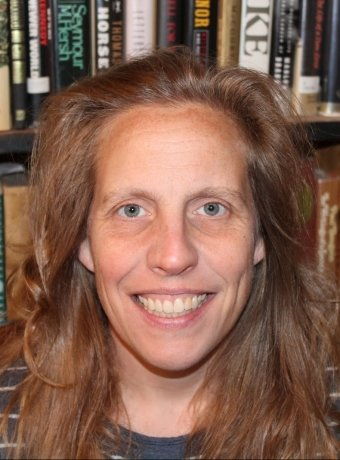
Holly Hassel is professor of writing studies and director of composition at Michigan Technological University. She has served as chair of the Conference on College Composition and Communication, editor of Teaching English in the Two-Year College, and currently co-chairs the MLA/4Cs Task Force on AI and Writing. Her scholarship and research focuses on writing program administration, writing assessment, and supporting students’ transitions to college literacies and has appeared in many journals and books. Her most common emergencies involve first-year student writers, graduate student instructors, and two teenage children, as well as her leadership roles in shared governance and national professional service responsibilities.

Image
Alt Text: Profile Photo of Professor Holly Hassel

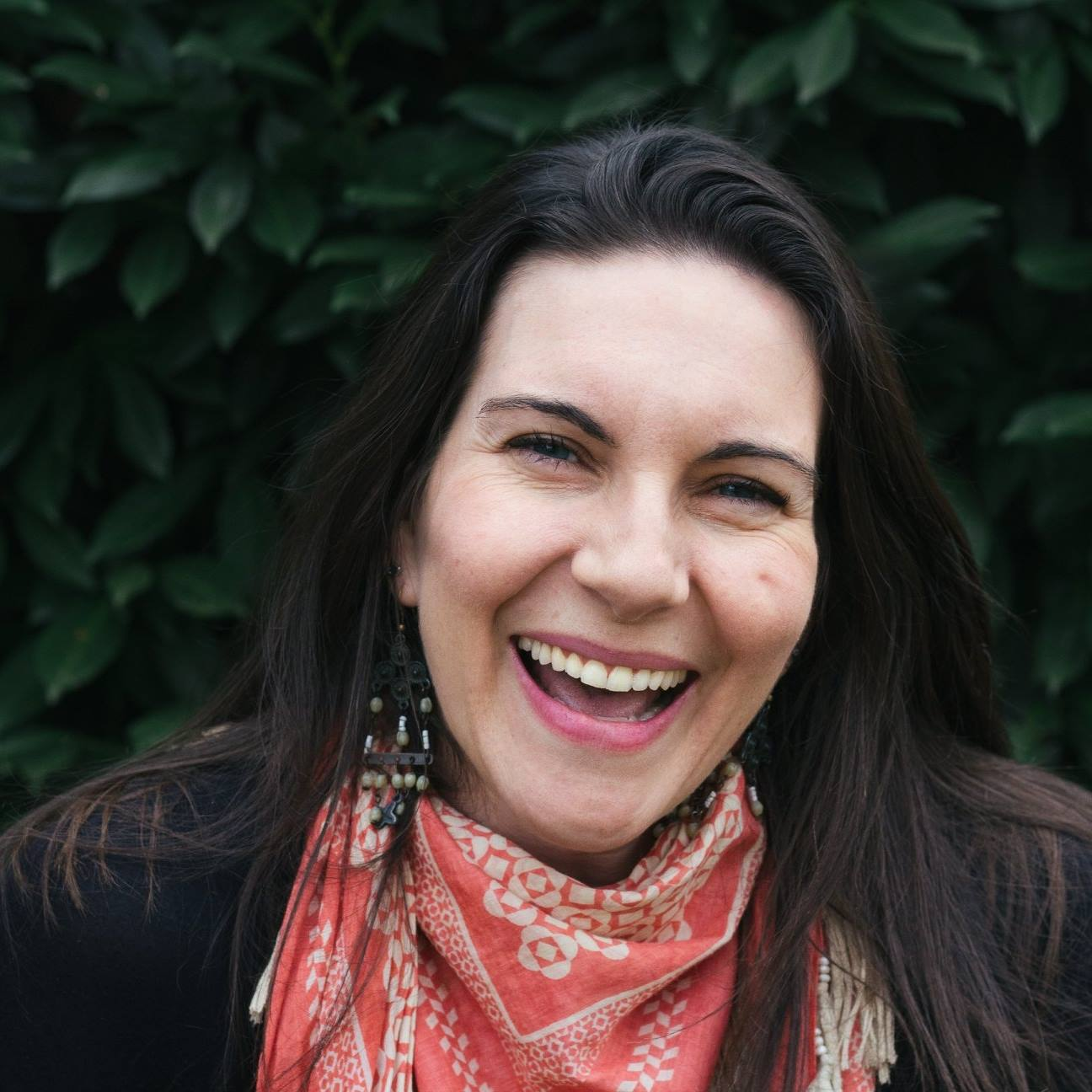
Kate Pantelides is associate professor of English and Provost’s Fellow at Middle Tennessee University. Her research and teaching address feminist rhetorics, research methods, and innovative pedagogies. Most recently, she co-edited a special issue of The Journal of Writing Assessment focused on methods of student self-placement with the amazing Erin Whittig, who has talked her down in the face of numerous writing stressors. Both her emergencies and joys often revolve around her two middle school-aged children, her anxious and adorable dog, her excellent partner, and her tendency to overextend in university and national disciplinary service.

Image
Alt Text: Profile Photo of Professor Kate Pantelides

2024 Nancy A. Myers Feminist Research Grant

I am happy to share the news that the recipient of the 2024 CFSHRC Nancy A. Myers Feminist Research Grant, a biennial award of up to $700 for scholars to pursue or continue feminist projects, is Dr. Amy Gerald. Assistant Professor of English

Amy Gerald, smiling with glasses and wearing a denim jacket

at the University of South Carolina, Lancaster. Dr. Gerald’s article, “Finding the Grimkés in Charleston: Using Feminist Historiographic and Archival Research Methods to Build Public Memory,” appeared in Peitho 18.2 (2016). The grant will help carry that work forward by partially funding travel to the Moorland-Spingarn Research Center (MSRC) at Howard University to access undigitized material in the Archibald Grimké and Angelina Weld Grimké papers, with a goals of, to quote from her grant application, “recovery of theBlack members of the Grimké family” and “creating public memory within Charleston and beyond.”

The grant committee found the proposal robust, focused, clear, and in line with Coalition goals. As one committee member noted, “The idea of being able to recover Black descendants of the Grimké sisters already promises to make a significant intervention into existing feminist rhetorical narratives of 19th century womanist and suffragist rhetoric. Gerald has well-laid plans for conducting the research and disseminating its results.”

Dr. Gerald earned her Ph.D. from the University of North Carolina at Greensboro with a specialty in Rhetoric and Composition. She also has a graduate certificate in Women’s Studies, an MA in English from Appalachian State University, and a BA in English from Wake Forest University. Dr. Gerald’s scholarship lies at the intersection of feminism, rhetoric, and writing, with work appearing in journals such as PeithoComposition Studies, JACFeminist Teacher, the Writing Lab Newsletter and the edited collection The Teacher’s Body: Embodiment, Authority, and Identity in the Academy (SUNY P, 2003).

Congratulations to Dr. Gerald! We look forward to hearing and reading more about the project in the future.

In closing, I want to thank the committee members who carefully and thoughtfully reviewed the proposals for this award cycle:

  • Jaclyn Fiscus-Cannaday, Florida State University
  • David Gold, University of Michigan, *Committee Chair
  • Tarez Samra Graban, Florida State University
  • Kim Hong Nguyen, University of Waterloo
  • Ana Milena Ribero, Oregon State University

Your contributions to the Coalition are greatly appreciated!

Warmly,

Wendy Sharer, Immediate Past President and Awards Coordinator

2024 Winifred Bryan Horner Outstanding Book Award Recipients

A little over a week ago, the Coalition had the pleasure of recognizing recipients of the Winifred Bryan Horner Outstanding Book Award at our CCCC Wednesday evening event in Spokane. The Horner Award recognizes outstanding scholarship and research in the areas of feminist pedagogy, practice, history, and theory and carries a $200.00 honorarium. For this award cycle, the selection committee read and discussed 20 outstanding, diverse books—monographs and edited collection from multiple presses—published in calendar year 2022 or 2023. From among this impressive pool of nominated books, the committee selected two winners and four honorable mentions. 

Dr. Heather Brook Adams, wearing dark glasses and a black shirt, smiling in front of a gray background.
Our first award winner is Heather Brook Adams for her book, Enduring Shame: A Recent History of Unwed Pregnancy and Righteous Reproduction (U of South Carolina P, 2022). Dr. Adams is associate professor of English and a cross-appointed faculty member in the Women’s, Gender, and Sexuality Studies program at the  University of North Carolina Greensboro. In addition, she has coedited Inclusive Aims: Rhetoric’s Role in Reproductive Justice (Parlor P, 2024) with Nancy Myers, and her work has appeared in journals including Quarterly Journal of Speech, Rhetoric of Health and Medicine, Rhetoric Review, Women’s Studies in Communication, Peitho, Computers and Composition, and Pedagogy as well as in several edited collections. She currently directs the UNCG Humanities Network and Consortium.

Our second award winner is V. Jo Hsu for their book, Constellating Home:V. Jo Hsu, wearing a black shirt, black pants, and a patterned cap, smiling while standing in front several buildings.Trans and Queer Asian American Rhetorics (Ohio State UP, 2022). Dr. Hsu is assistant professor of Rhetoric & Writing at the University of Texas at Austin. They approach rhetorical studies through the lens of disability justice, queer and trans of color critique, and critical ethnic studies. The questions driving their work are: What can the field(s) of rhetoric do to foster connection and care across difference? And, what stories must we tell to remake worlds conducive to one another’s thriving? You access most of their work via www.vjohsu.com.

Honorable mentions were conveyed to the following scholars:

Jane Greer wearing glasses and a scarf smiling while standing next to a brick wall.
Jane Greer for Unorganized Women: Repetitive Rhetorical Labor and Low-Wage Workers, 1834-1937 (U of Pittsburgh P, 2023). Dr. Greer is a Curators’ Distinguished Teaching Professor in the English Department at the University of Missouri, Kansas City, where she is also affiliated faculty member with the Center for Digital and Public Humanities. Her archival research focuses on the rhetorical performances and literacy practices of women and girls in the United States in the nineteenth and twentieth centuries, and she has collaborated with museums and cultural institutions across the Kansas City region to create opportunities for students to share stories of our collective past by composing museum tours and creating exhibits.

Dr. Gruwell smiling and wearing glasses, a blue shirt and a white sweater.Leigh Gruwell for Making Matters: Craft, Ethics, and New Materialist Rhetorics (Utah State UP, 2022). Dr. Gruwell is associate professor of English at Auburn University, where she teaches undergraduate and graduate courses in writing and rhetoric. Gruwell’s research centers on digital, feminist, and new materialist rhetorics as well as composition pedagogy and research methodologies. Along with Charles N. Lesh, she is the editor of Mentorship/Methodology: Reflections, Praxis, Futures.

Dr. Nish smiling and wearing a grey shirt

Jennifer Nish for Activist Literacies: Transnational Feminisms and Social Media Rhetorics (U of South Carolina P, 2022). Dr. Nish is associate professor of rhetoric and composition at Michigan Technological University. Her research engages with transnational feminism, digital media, activist rhetoric, and disability. Her research is also published in College Composition and Communication, Peitho, and several edited collections. Her current projects include a co-edited collection (with Belinda Walzer, Mais Al-Khateeb, and Sweta Baniya) titled (Re)Mobilizing Solidarity in/and Transnational Feminist Rhetorics and a book project that explores the activism and advocacy of people with Long Covid and myalgic encephalomyelitis (ME).

Dr. Royster, smiling, wearing a multi-colored top and elephant necklace

Jacqueline Jones Royster for Making the World a Better Place: African American Women Advocates, Activists, and Leaders, 1773-1990 (U of Pittsburgh P, 2023). Dr. Royster is former Ivan Allen Jr. Chair in Liberal Arts and Technology and Dean of the Ivan Allen College of Liberal Arts at the Georgia Institute of Technology (2010-2019), and Professor Emerita at both The Ohio State University and Georgia Tech. In addition to Making the World a Better Place, her book publications include  Double-Stitch:  Black Women Write about Mothers and Daughters (co-edited, 1991); Southern Horrors and Other Writings:  The Anti-Lynching Campaign of Ida B. Wells-Barnett (1997; 2nd edition 2016), Traces of a Stream: Literacy and Social Change among African American Women (2000), Profiles of Ohio Women, 1803-2003 (2003); Calling Cards: Theory and Practice in the Study of Race, Gender, and Culture (co-edited, 2005); Feminist Rhetorical Practices: New Horizons in Rhetoric, Composition, and Literacy Studies (co-authored with Gesa Kirsch, 2012, and recipient of the 2014 Horner Book Award); one college textbook and two school textbook series. She is also past recipient of The Mina P. Shaughnessy Prize and the Frances Andrew March Award from the MLA and the Braddock Award and the Exemplar Award from CCCC. She has also been named a Fellow of the Rhetoric Society of America.

Congratulations to all recipients! 

The Coalition would like to extend sincere gratitude to the members of the 2024 Winifred Bryan Horner Outstanding Book Award committee:

  • Risa Applegarth, University of North Carolina, Greensboro
  • Nicole Clawson, University of Utah
  • Regina Duthely-Barbee, University of Puget Sound
  • Nanette Hilton, College of Southern Nevada, *Committee Chair
  • Jennifer Love, Lane Community College

THANK YOU for all you do for the Coalition!

-Wendy Sharer, Immediate Past President and Awards Coordinator

Congratulations to the 2023 Lisa Ede Mentoring Award and Presidents Dissertation Award Recipients

Coalition Friends,
It was wonderful to see so many of you in Atlanta for Feminisms and Rhetorics! For those of you who were not able to attend, I am thrilled to share information about two awards presented at Spelman: the 2023 Lisa Ede Mentoring Award and the 2023 Presidents Dissertation Award. Details about award recipients are below: please take a moment to read about and celebrate the winners’ accomplishments!

-Wendy Sharer, Immediate Past President and Awards Coordinator
2023 Lisa Ede Mentoring Award

The Lisa Ede Mentoring Award recognizes an individual or group with a career-record of mentorship, including formal and informal advising of students and colleagues; leadership in campus, professional, and/or local communities; and other activities that align with the overall mission and goals of the Coalition. This year’s recipient is Dr. Gwendolyn Pough, Professor of Women’s and Gender Studies and Dean’s Professor of the Humanities at Syracuse University. Dr. Pough exemplifies the kind of mentoring this award was created to acknowledge and amplify.
Gwendolyn Pough, in a red top and dark-framed glasses, stands in front of a bookcase
Her significant contributions to the study and application of feminist rhetorical theory include an edited collection, Home Girls Make Some Noise: Hip Hop Feminist Anthology; a single-authored book, Check It While I Wreck It: Black Womanhood, Hip Hop Culture, and the Public Sphere; over two dozen articles and book chapters; and more than fifty scholarly presentations, lectures, and keynotes. Pough has also led major professional organizations, including both the Conference on College Composition and Communication (for which she was Chair) and the Rhetoric Society of America (of which she is currently President). Too, she has served and continues to serve the Coalition through her membership on our Advisory Board since 2014.

Through all of these endeavors and accomplishments, Dr. Pough has been an invaluable resource–professionally and personally–for the many, many people she has mentored, a fact reflected in the multiple letters from current and former students and colleagues that were submitted in support of her nomination. Regarding these letters, the Lisa Ede Mentoring Award Committee explains,

“It would be difficult to summarize the love and gratitude expressed for Pough by those mentees who contributed to her nomination. Many talk about her presence, her generosity, her intellect, and her mentorship in terms that are reserved for someone who has been among the most impactful people in their lives. Pough’s mentees seem not only stirred but transformed by her example. Indeed, the committee was impressed by the holistically strong nomination filled with letters from a diverse and equally impressive collective of mentees. Those who have taken her classes or worked with her on dissertation projects describe a fierce teacher who shows up everyday ready to do the work. Those who have met her through professional networks comment on how she takes up labor that she doesn’t need to do simply because she wants to do her part in building our collective field. Those inspired by her scholarship express how she makes deep, complex inroads into the ongoing conversations about Black rhetorics, feminism, hiphop, and more, and makes it look easy! In sum, the nominating letters powerfully demonstrate that she has a wide range of talents and mentoring styles, all rooted in Black feminist, hip-hop pedagogies. Pough has radically changed the game and challenged white feminism her entire career.”

Congratulations and thank you to Dr. Pough!

Thank you as well to the Lisa Ede Mentoring Award Committee: Moushumi Biswas, Sherri Craig (Co-chair), Laura Davies, Allison Durazzi, and Gavin Johnson (Co-chair). Your contributions to the Coalition are greatly appreciated!


2023 Presidents Dissertation Award

This year, the woNisha Shanmugaraj, wearing a white top, stands in a hallwayrk of two scholars was recognized with the 2023 Presidents Dissertation Award. The first recipient is Dr. Nisha Shanmugaraj, who completed her dissertation, “Negotiating the Model Minority: HowIndian American Women Rearticulate Dominant Racial Discourse,” at Carnegie Mellon University and currently holds the rank of Assistant Professor of English at the University of Colorado, Boulder. In her dissertation, Dr. Shanmugaraj builds on work by Aja Martinez, Jay Dolmage, Lisa Flores, Tamika Carey, Ursula Ore, and many others as she analyzes case studies of and interviews with twenty-five second-generation Indian (South Asian) American women to consider their rhetorical strategies for responding to and challenging the “model minority” stereotype.

The award committee praised the project for being “densely rooted in the coalitional and intersectional frameworks of feminist studies” and noted that its “contributions in terms of identity formation and vernacular rhetorical practice are many. And the grounded theory approach to the robust data set is well suited to the coalitional stance the author takes.” Congratulations to Dr. Shanmugaraj!

The second award was earned by Dr. Salma Kalim, Assistant Professor at the International Islamic University in Islamabad, Pakistan. Dr. Kalim researched and composed her dissertation, “Affect and Digital Circulation in PakistanDr. Salma Kalim, wearing a brown top and tortoise shell framed glasses, stands in front of a white and red walli Feminist Rhetorics,” at Miami University in Ohio. The project draws on the work of Sara Ahmed, Gesa Kirsch, Eric Darnell Pritchard, and Jacqueline Jones Royster, among many others, and employs rhetorical analysis and interviews to explore how Pakistani women create and circulate messages of feminist activism–both digital and offline–to further regional and transnational alliances and to create change in conservative, oppressive contexts. The award committee praised Dr. Kalim’s project, noting that it is “thoroughly and richly situated within transnational feminist rhetorics and circulation studies” and that it effectively opens multiple avenues for future research. Congratulations to Dr. Kalim!

Much gratitude is due to the hard-working committee that read multiple dissertations and selected these deserving recipients: TJ Geiger, Maureen Johnson, Temptaous Mckoy (Chair), Temitope Ojedele, , and Jill Swiencicki. Thank you!

Call for Submissions & Volunteers: Winifred Bryan Horner Outstanding Book Award and Nancy A. Myers Feminist Research Grant

The Coalition is pleased to accept nominations for two upcoming awards – the biennial Winifred Bryan Horner Outstanding Book Award and the biennial Nancy A. Myers Feminist Research Grant! Descriptions, eligibility guidelines, and links to submission instructions for both awards are below. To see a list of past award winners, and to learn more about our awards in general, please visit https://cfshrc.org/awards.

We’re also seeking additional award committee members for both awards. Reviewers will receive my deepest gratitude and will get the chance to read some excellent books and/or learn about cutting edge, emerging research! If you are interested in helping adjudicate either award, please reach out to me at sharerw@ecu.edu as soon as possible to let me know.

I am happy to answer any questions about the awards or the award committees.

All best,
Wendy Sharer, Immediate Past President and Awards Coordinator
sharerw@ecu.edu

WINIFRED BRYAN HORNER OUTSTANDING BOOK AWARD

The Winifred Bryan Horner Outstanding Book Award is presented biennially in even years for work in the field of composition and rhetoric to recognize outstanding scholarship and research in the areas of feminist pedagogy, practice, history, and theory. The award carries a $200 honorarium and will be presented at the Wednesday evening meeting of the Coalition at the 2024 Conference on College Composition and Communication.

An eligible nomination will have been published in the two years previous to the year of the award. (For example, a work eligible for the 2024 award will have been published in calendar year 2022 or 2023.) Single or multiple authored books, as well as edited volumes, are eligible. We welcome nominations from authors, editors, publishers, or readers. To be eligible for the award, a nominee must be a member of Coalition at the time of nomination.

Please see the Horner Award Page for review criteria and application details. Nominating statements and 5 (five) physical or electronic copies of the nominated book are due to Wendy Sharer (sharerw@ecu.edu) by December 1, 2023.

NANCY A. MYERS FEMINIST RESEARCH GRANT

The Nancy A. Myers Feminist Research Grant is also presented biennially in even years to help researchers discover, pursue, or continue feminist projects that require funding and funded activities. This award provides up to $700 for eligible activities, including – but not limited to – archival research, translation, interview transcription, and digital archivization and/or digital project development. It will be presented at the Wednesday evening meeting of the Coalition at the 2024 Conference on College Composition and Communication.

Please see the Myers Award Page for eligibility requirements and application details. Application materials are due to Wendy Sharer (sharerw@ecu.edu) by January 10, 2024.

Welcome Hannah Taylor to the Peitho Editorial Team

We are pleased to announce that Dr. Hannah Taylor will serve as Peitho‘s next Web Coordinator.

A head, shoulders, and torso shot of Hannah Taylor. Hannah is standing outside near a brick wall with some greenery behind her. She is smiling. She wears a white blouse dotted with clusters of pink cherries, and has shoulder-length brown curly hair. She wears a small gold nose piercing.

Hannah Taylor, incoming Web Coordinator

Hannah is a Lecturer in the Thompson Writing Program at Duke University. Hannah’s research focuses on the intersections of public health, feminist rhetorics, and reproductive rights. Specifically, she analyzes the material, technological, and public discourses that shape the ways we discuss reproductive processes, bodies, and freedoms.

Peitho’s Web Coordinator supports the journal in significant ways, including building or uploading all issues of the journal to its Web-based platform, converting all issues to accessible PDFs, and archiving past issues. We have been fortunate to have excellent and caring folks serve us in this role, and we know Hannah will continue this tradition of excellence and care. She has a demonstrated commitment to accessibility, both at the front- and back-end of journal production, has worked collaboratively on establishing Communication Design Quarterly as a stand-alone journal, and assisted with multiple publication projects at Clemson University’s Pearce Center for Communication while in graduate school.

Finally, when she is not working, Hannah likes to bake, read, and craft alongside her dog and cat. She is excited to join the editorial team of Peitho, and we could not be more pleased to welcome her to the team!